
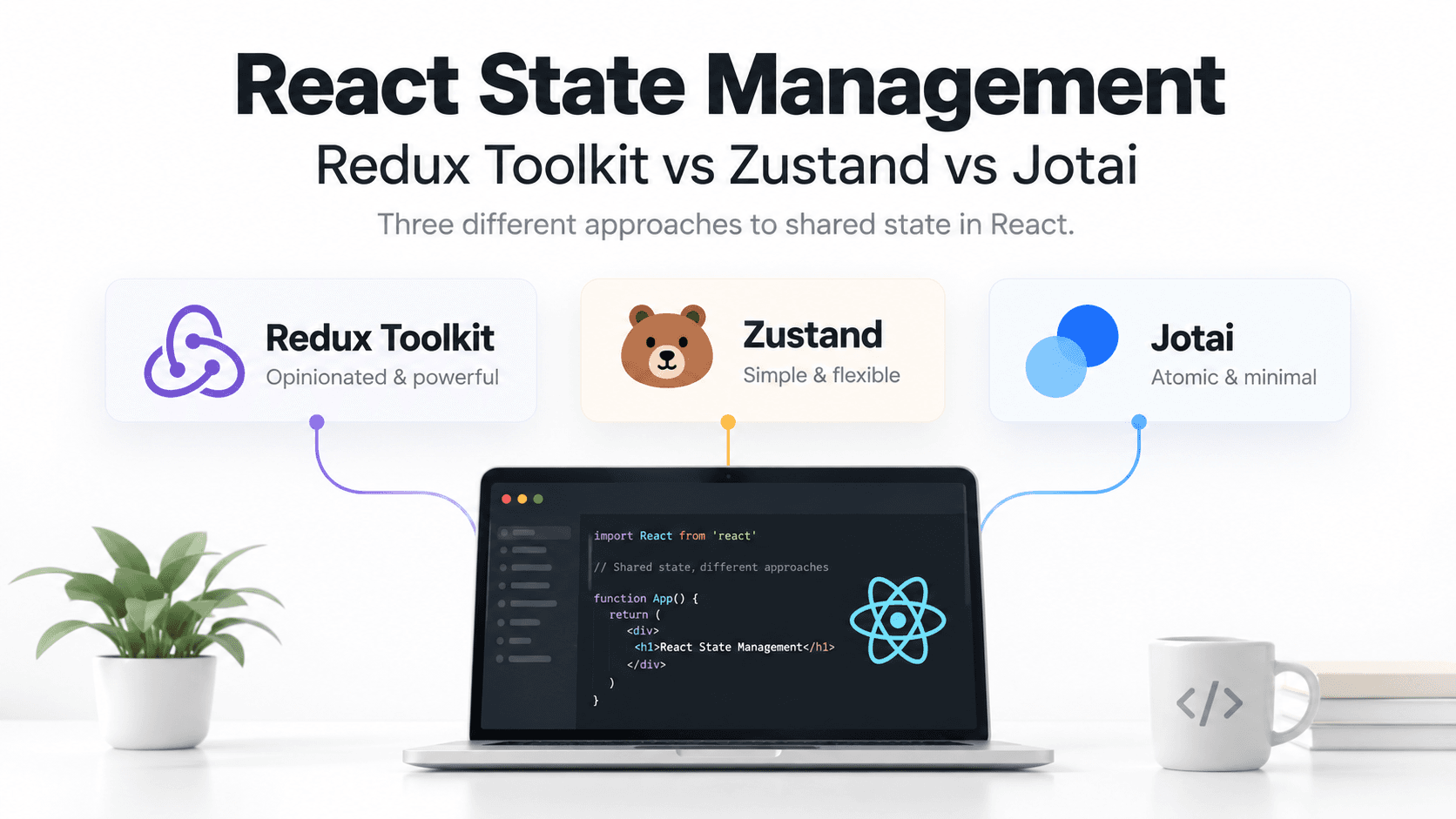
React State Management: Redux Toolkit vs Zustand vs Jotai
Choosing a state management library for React should not be a popularity contest.
Zustand, Jotai, and Redux Toolkit can all manage shared application state. But they approach the problem differently, and those differences become more important as your application grows.
The right choice depends on how your state is organized, how developers interact with it, and how much structure your project needs.
The Three Approaches
Zustand: Store-based simplicity
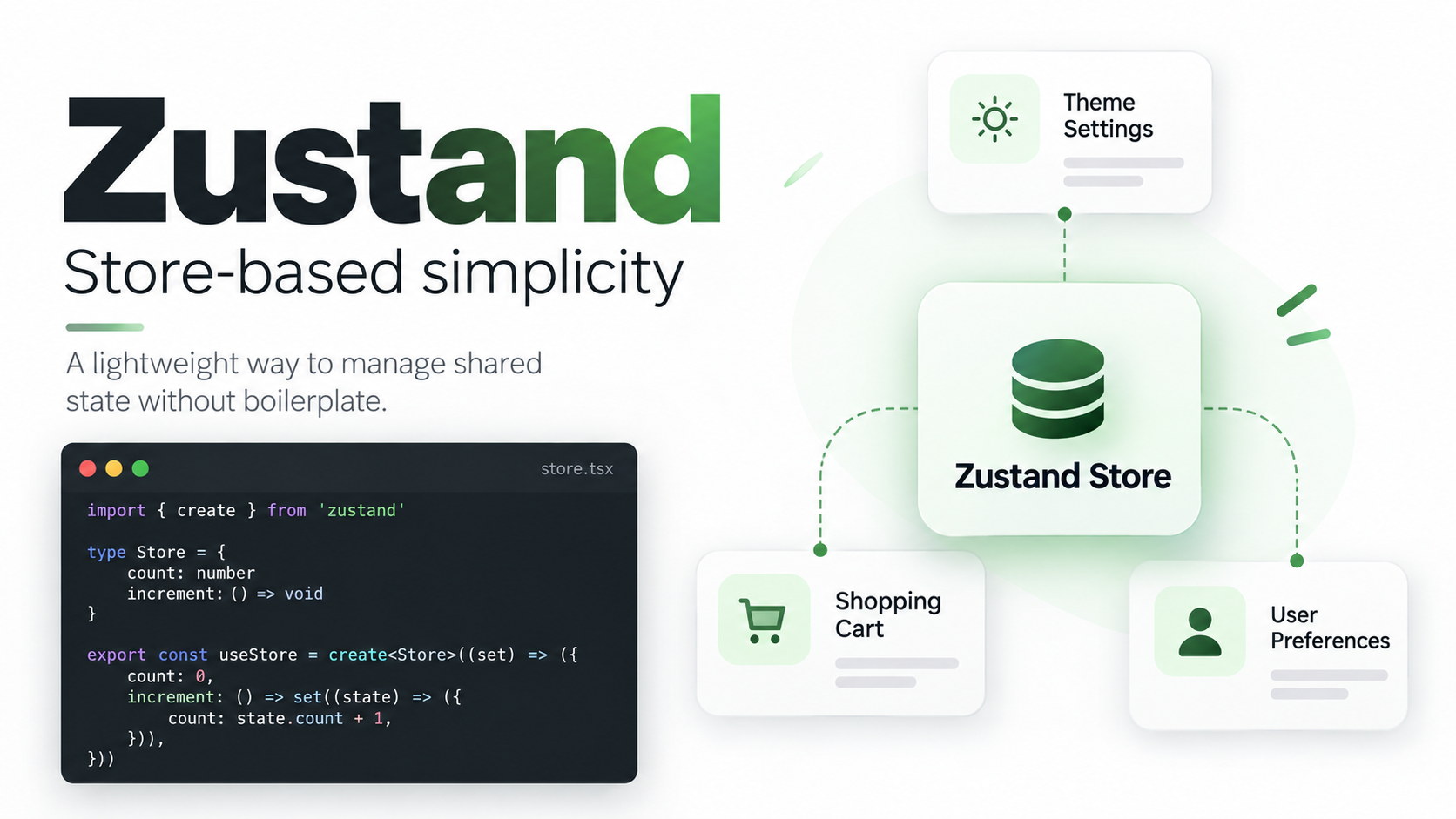
Zustand gives you a lightweight way to create shared stores without requiring a provider for typical usage.
It works particularly well for application settings, shopping carts, dashboards, and UI interactions.
You define state and actions together, then subscribe to exactly what your component needs.
Jotai: Atomic state management
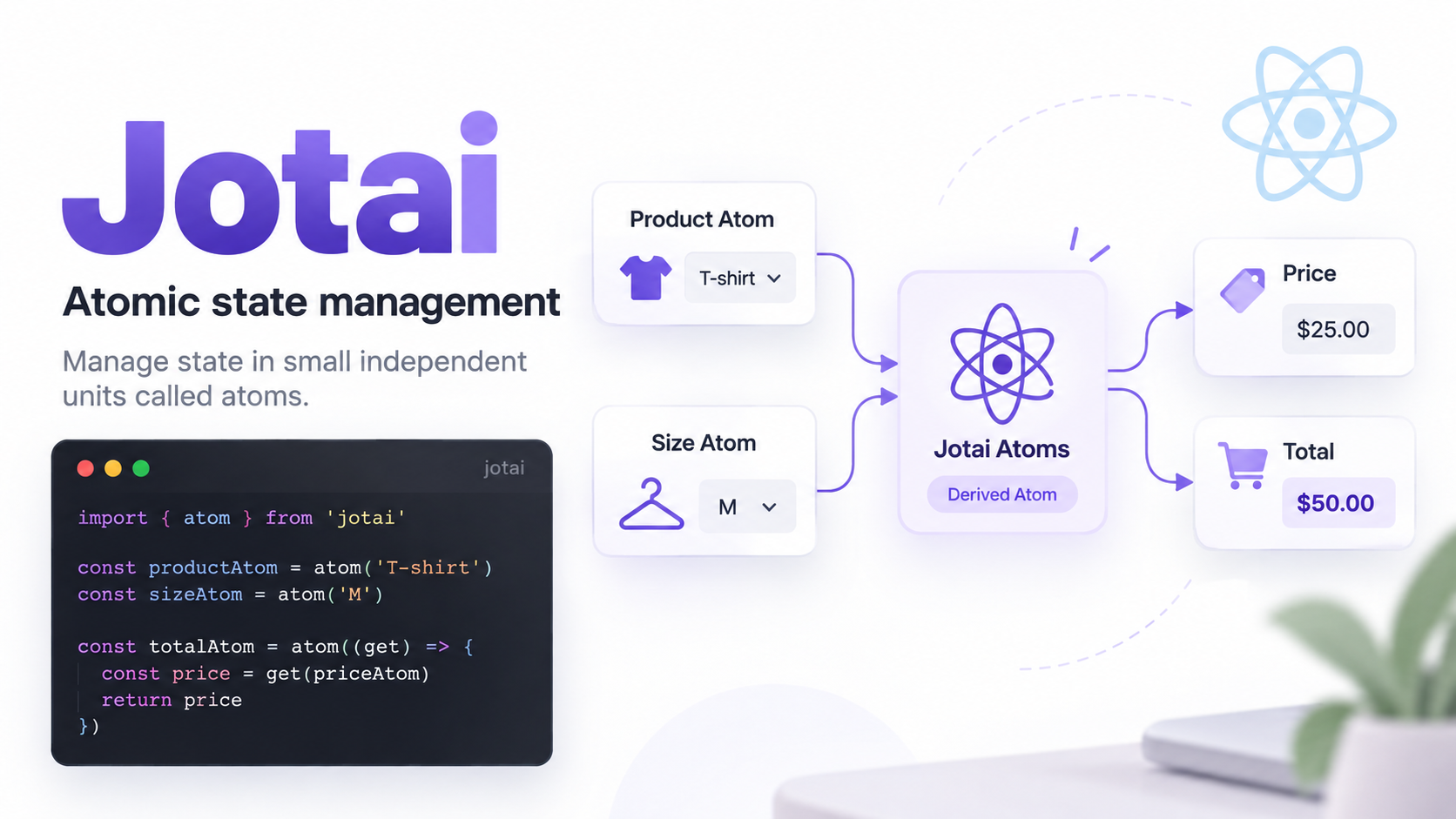
Jotai divides state into smaller independent units called atoms.
Instead of managing everything through one central store, components subscribe to individual atoms. You can also create derived atoms that calculate values from other atoms.
This approach is especially useful for interactive forms, editors, configurable interfaces, and applications with interconnected state.
Redux Toolkit: Structured state management
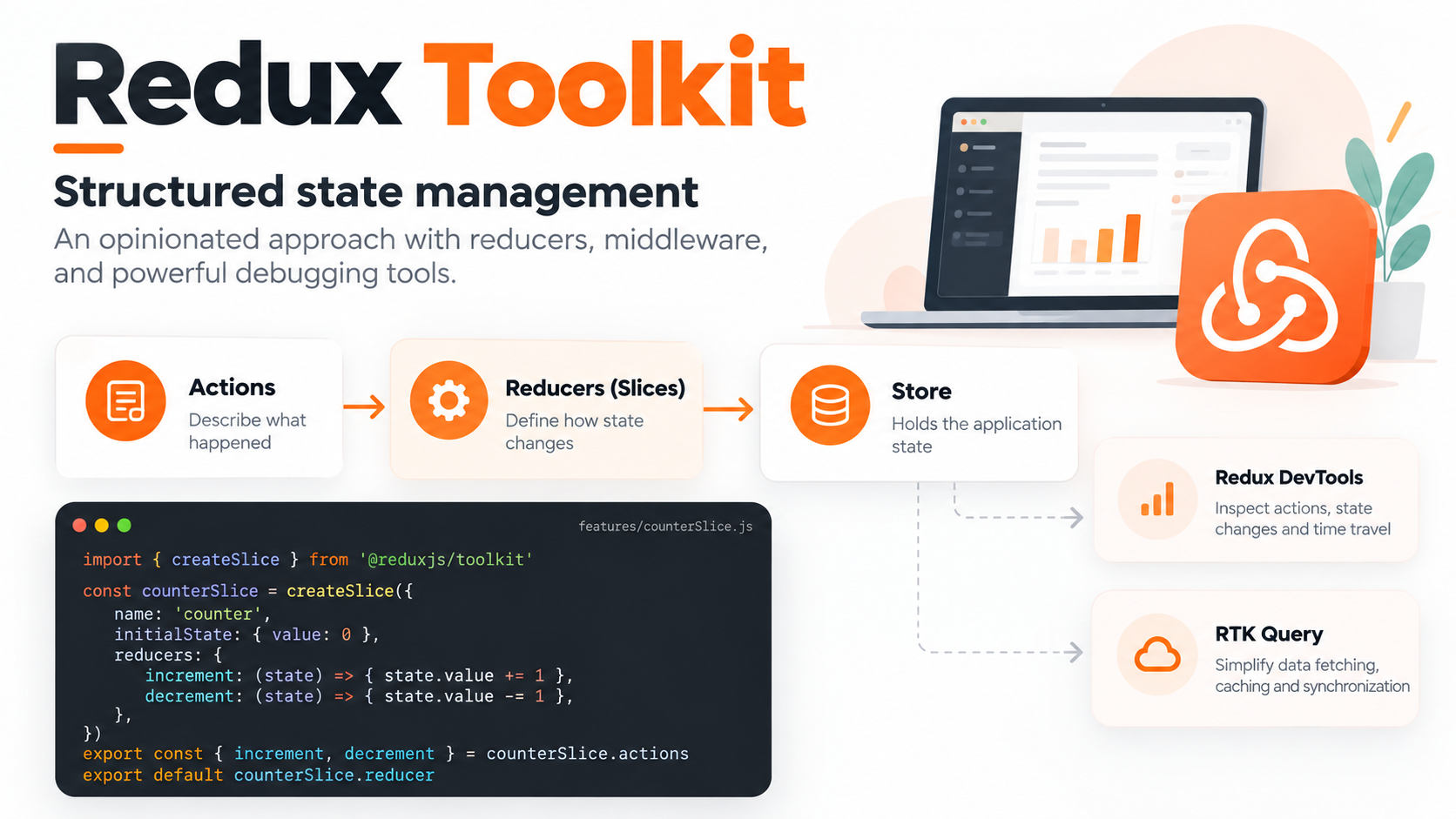
Redux Toolkit provides a more opinionated architecture around state updates.
It includes utilities for creating stores, organizing reducers, handling asynchronous logic, and integrating debugging tools.
For applications where many developers need consistent patterns and predictable state transitions, that structure can be valuable.
Zustand vs Jotai vs Redux Toolkit: Quick Comparison
| Feature | Zustand | Jotai | Redux Toolkit |
|---|---|---|---|
| State model | Stores | Atoms | Central Redux store |
| Setup | Minimal | Minimal | More structured |
| Learning curve | Low | Low to moderate | Moderate |
| Boilerplate | Very low | Low | Moderate |
| Derived state | Selectors | Derived atoms | Selectors |
| Debugging | Optional DevTools middleware | Debugging utilities | Integrated Redux DevTools |
| API data caching | Separate solution commonly used | Integrations available | RTK Query included |
| Best fit | Simple shared state | Fine-grained reactive state | Structured, complex workflows |
These are architectural differences, not performance rankings. Any of the three can work well in a large React application.
When Zustand Makes Sense
Choose Zustand when your application needs shared state but you want to keep implementation simple.
Consider a dashboard where users can switch themes, manage filters, open panels, and maintain preferences across pages.
A Zustand store can keep those values and their update functions together without introducing a larger architecture.
It is also a practical option for MVPs where development speed and readability matter.
The trade-off is flexibility. Without agreed conventions, teams may organize stores and actions inconsistently as a project grows.
When Jotai Makes Sense
Choose Jotai when your application has many small state values that depend on one another.
Imagine a product configurator.
Changing a product's size affects its price. Selecting an accessory updates the total. Different interface sections need different pieces of that information.
Jotai lets you represent those values as atoms and calculate dependent values through derived atoms.
Instead of manually synchronizing multiple state fields, you define their relationships.
The trade-off is architectural discipline. A large collection of poorly organized atoms can become difficult to navigate.
When Redux Toolkit Makes Sense
Choose Redux Toolkit when state transitions need consistent organization and strong debugging capabilities.
Consider an application with complicated workflows, multiple teams, permissions, and business rules that affect shared state.
Redux Toolkit provides slices, actions, reducers, middleware, and selectors that help standardize how those changes happen.
Its optional RTK Query functionality also provides data fetching and caching.
The trade-off is additional structure. For a small application with a handful of shared values, that structure may create more work than necessary.
The Mistake: Using Global State for Everything
Before selecting any library, ask whether the data belongs in global client state at all.
A text input used by one component may only need React's useState.
A filter that should be shareable through a link might belong in URL search parameters.
Data fetched from an API often needs dedicated caching and synchronization rather than another manually maintained global variable.
State management tools solve specific problems. They should not become storage locations for every value in the application.
How We Would Choose
We use three practical questions when evaluating state management:
1. How interconnected is the state?
For straightforward shared values and actions, Zustand is often sufficient. For many independently reactive values and derived relationships, Jotai deserves consideration.
2. How much architectural structure does the team need?
Smaller teams may benefit from the flexibility of Zustand or Jotai. Teams managing complex business workflows may prefer Redux Toolkit's established conventions.
3. What happens when something goes wrong?
If understanding action history and tracing state transitions is central to debugging, Redux Toolkit is an especially strong candidate.
That does not make Redux Toolkit universally better. It means its design serves that requirement particularly well.
Final Verdict
There is no universal winner.
Pick Zustand when you want a straightforward shared store with minimal setup.
Pick Jotai when you need composable, fine-grained state with derived relationships.
Pick Redux Toolkit when predictable workflows, consistent architecture, and mature debugging are priorities.
And if React's built-in state management already handles your requirements, you may not need any of them.
The best state management library is the one that makes your application's behavior easier to understand, change, and maintain.
Which one are you using in your current React project, and what made you choose it?
Is your React app's state getting hard to manage?
Explore our Web Application Development services or book a call, and we'll help you simplify it.